
News
Sustainable Biomass Conversion
Sparking Curiosity: Sydney Bradley uses art to make science more accessible
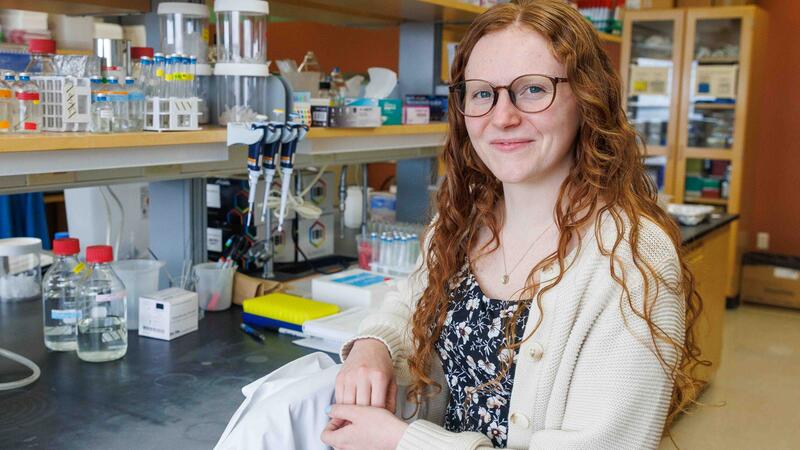
As a graduate researcher at the University of Wisconsin–Madison, Sydney Bradley studies microbiology in pursuit of better biofuels. But she’s not just interested in publishing her findings in scientific journals.
Bailey Marshall, a PhD candidate in cellular and molecular biology, works in Robert Landick’s lab, where she studies genetic engineering of bacteria for better biofuel production.
Fourth-year PhD student Rose Lizzo studies proteins that regulate production of enzymes that enable a bacterium called Zymomonas mobilis to turn plant sugars into sustainable fuels and chemicals.
As a graduate researcher at the University of Wisconsin–Madison, Sydney Bradley studies microbiology in pursuit of better biofuels. But she’s not just interested in publishing her findings in scientific journals.
Bradley integrates her passion for art, design, and education to make science accessible to a broader audience.
Michigan State University scientists with the Great Lakes Bioenergy Research Center used computer simulations to model how 33 known inhibitors found in broken down plant material (hydrolysate) interact with the membrane of a promising bioenergy microbe called Zymomonas mobilis. These simulations revealed that most inhibitors easily passed through the membrane and were highly toxic to the cells; only a few sugars were slow to penetrate. Concluding that most inhibitory molecules would likely overwhelm efforts to remove them, researchers suggest that it would be more effective to dilute the hydrolysate before feeding it to microbes.
A team of international researchers led by the Great Lakes Bioenergy Research Center used alternate NMR methods to produce clearer pictures of molecular structures in lignin, a complex matrix of potentially-valuable molecules found in plant cell walls.
Lignocellulosic biorefineries make liquid fuels out of non-food plant material, such as crop waste or trees and grasses grown just for energy. In addition to biofuel, these refineries generate energy-rich byproducts that can be a source of additional income. These side hustles not only pad the bottom line, they make biofuels more competitive by allowing refiners to sell the fuel for less money.
Great Lakes Bioenergy Research Center co-investigator Vatsan Raman has been tapped to oversee research within the College of Agriculture and Life Sciences at the University of Wisconsin–Madison.
The first member of his family to attend high school, Changsu Kim is now a third-year PhD student in the Department of Chemical and Biological Engineering at UW–Madison. He specializes in molecular dynamic simulations and artificial intelligence and has worked with the Great Lakes Bioenergy Research Center to design models for selecting the best solvent mixtures for isolating lignin, a chemical-rich but hard to process part of plant cell walls.
Scientists have figured out how two famously poisonous plants create chemicals with surprising medical potential. After tracking thousands of genes in wolfsbane and larkspur, they identified six enzymes needed to build a complex compound called atisinium. The team recreated the process inside tobacco plants, offering a sustainable way to produce and test these rare molecules in larger amounts.
In addition to carrying out basic science, the Great Lakes Bioenergy Research Center serves as a training ground for the next generation of scientists, with more than 1,500 trainees who have gone on to work in academia, government, and industry roles.


