

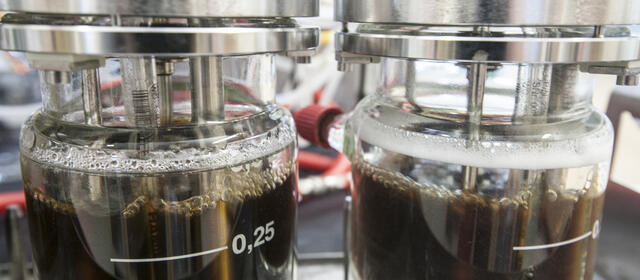
The flow-through reaction setup progressively dissolves biomass producing fractions that are rich in (from left to right) lignin monomers, hemicellulose and cellulose-derived sugars. Photo by Matthew Wisniewski
Who We Are
The Great Lakes Bioenergy Research Center (GLBRC) is a U.S. Department of Energy-funded Bioenergy Research Center led by the University of Wisconsin–Madison. With Michigan State University and other partners, we are developing resilient bioproducts made from dedicated energy crops grown on marginal lands. Our mission is simple: creating bio-based products that are industry relevant and economically viable.
Research Themes
Sustainable cropping systems
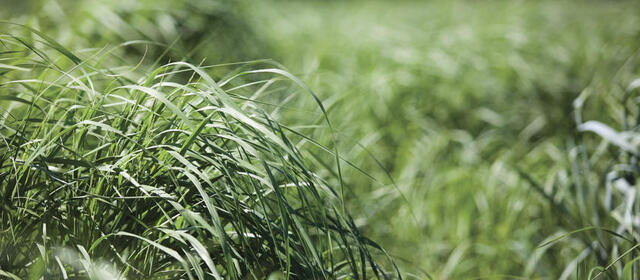
Engineering bioenergy crops to enhance their environmental and economic value
GLBRC News

Michigan State University researcher Bruno Basso, a world-renowned soil scientist and expert in precision agriculture, will receive the 2026 Carl Sprengel Agronomic Research Award from the American Society of Agronomy, Crop Science Society of America and Soil Science Society of America.
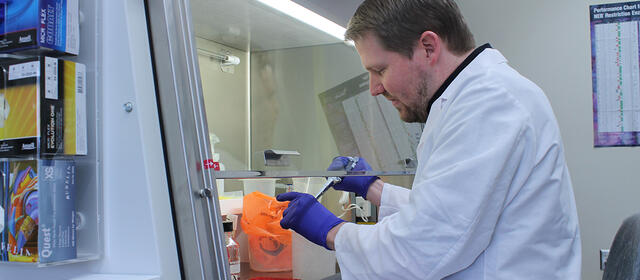
Scientists from the University of Wisconsin–Madison have developed a tool that researchers can use to selectively boost the activity of certain genes in bacteria, potentially unlocking discoveries in medicine and biotech.