
Switchgrass defense mechanisms can inhibit biofuel production
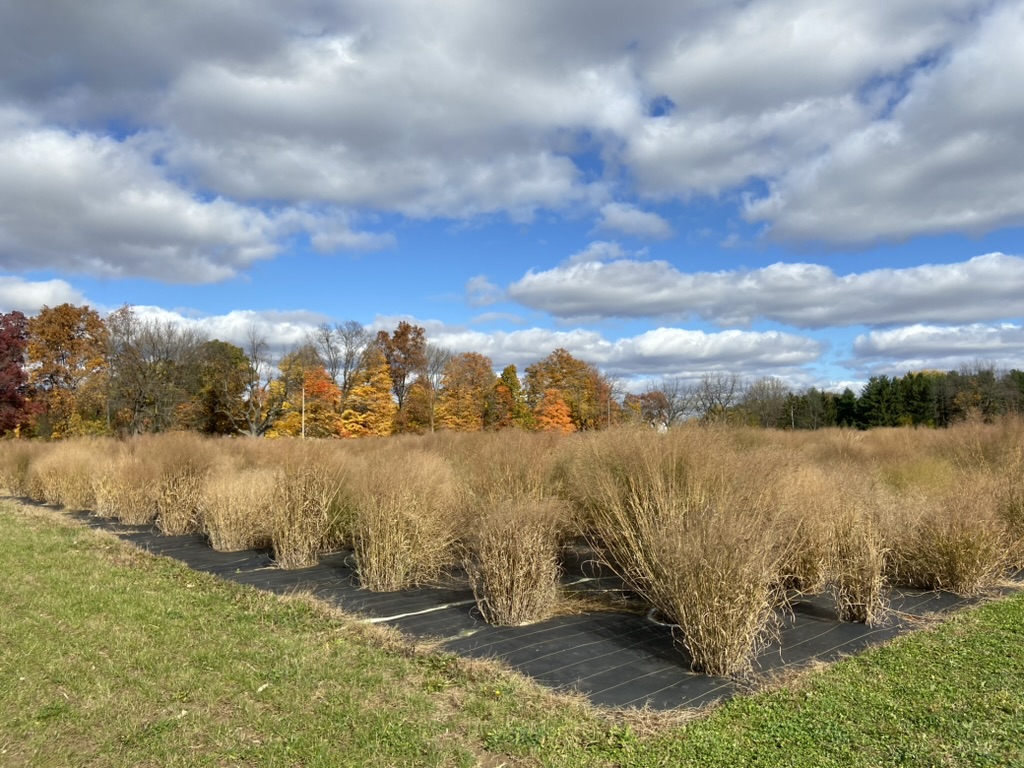
Researchers studied switchgrass variants grown at an experimental site in Michigan to draw connections between plant chemicals that ward off fungal disease and the amount of alcohol that can be made from the grass.
The Science
Over millions of years, plants have developed ways to protect themselves in the field. For example, plants produce special chemicals, or metabolites, to combat harmful microbes, especially fungi. But those same metabolites can make it harder for biorefineries to ferment the plant sugars into fuel or other products with yeast, a type of fungus.
This study investigated the connection between chemical defenses in switchgrass and fermentation of the plant fibers for biofuel. Using a long-term field experiment in Michigan, scientists measured variation in fungal infection, specialized metabolite production, and fermentation efficiency. Results showed that switchgrass lines with high resistance to fungal disease also were also harder to ferment into bioproducts. They identified saponins, a type of metabolite, as the chemical most likely responsible for both effects.
The Impact
Sustainable production of biofuels and chemicals from non-food plants requires better field productivity and biorefinery efficiency. Yet there are trade-offs: Breeding switchgrass that produces more antifungal metabolites could improve yields grown on marginal lands without the use of pesticides, but those metabolites are also toxic to one of the most widely used microbes in industrial biofuel production. This study identifies potential solutions, including the addition of a chemical to protect yeast or the use of bacteria for fermentation.
Summary
Researchers with the Great Lakes Bioenergy Research Center analyzed 102 randomly sampled switchgrass genotypes grown at the Kellogg Biological Station in Michigan to identify metabolites, categorized into three classes: flavonoids, phenolamides, and saponins. Dried biomass was deconstructed by soaking in aqueous ammonia and enzymatic hydrolysis. The resulting hydrolysates were fermented with Saccharomyces cerevisiae, and the results classified as normal (near 100% sugar fermentation), lag (near 100% fermentation with delay), and recalcitrant (little to no ethanol).
Plants from the Atlantic population, typically the most resistant to fungal pathogens, had the highest concentrations of flavonoids and saponins and showed the most recalcitrance to yeast fermentation. Among 1,589 metabolites identified through metabolomics, saponins were among the most likely to explain variation in both rust infection and fermentation yield, with just four compounds associated with 57.9% of variation in rust susceptibility.
Additional experiments showed that ammonia pretreatment reduced the overall abundance of saponins, though recalcitrant Atlantic samples had significantly more saponins than Midwest samples before and after pretreatment. Researchers repeated fermentation with the addition of ergosterol, the fungal target of saponins, which had the predicted effect of restoring fermentation. Fermentation with the bacterium Zymomonas mobilis did not show the same inhibition as yeast.