
Replanting bioenergy crops at the right time boosts profits
The Science
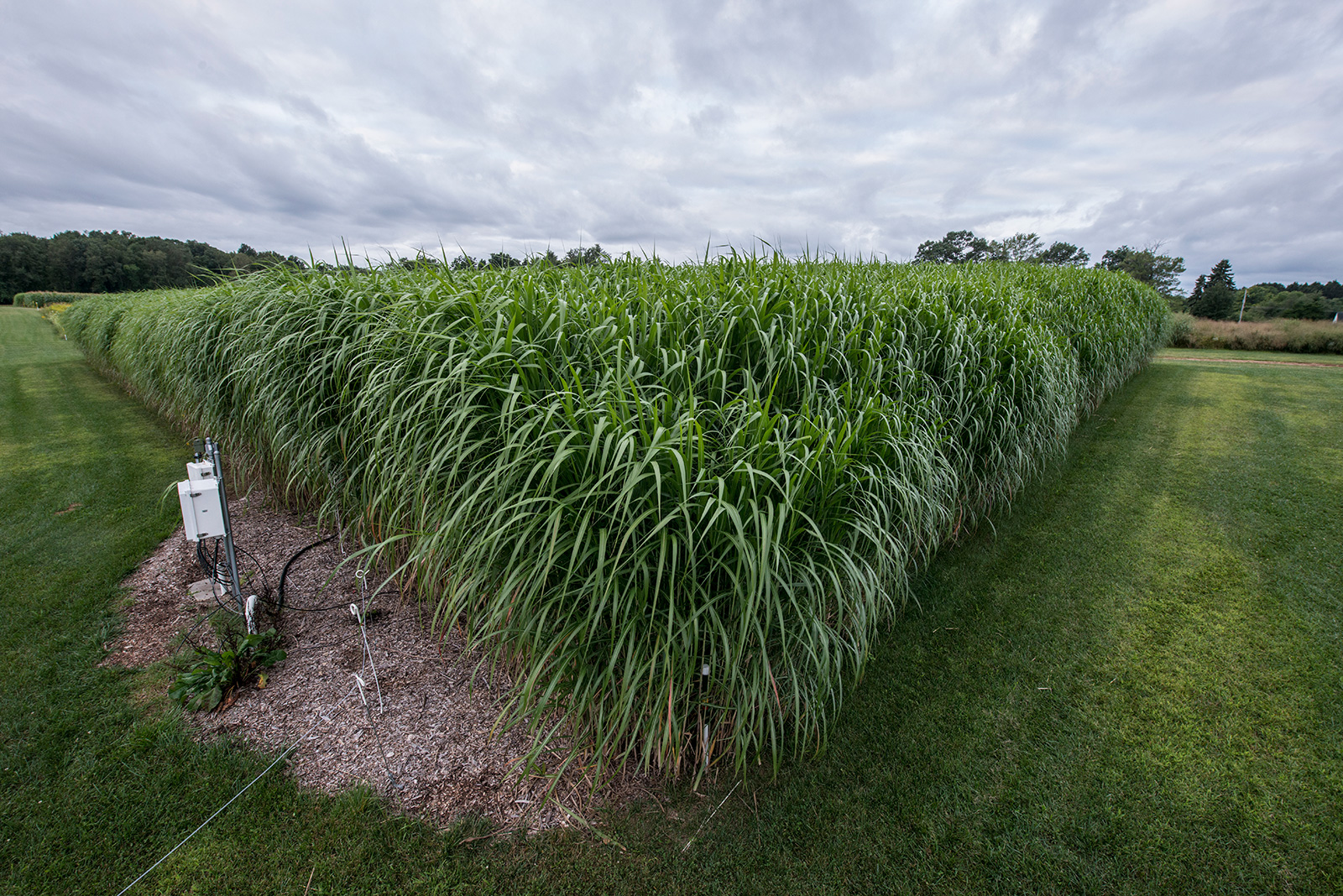
Switchgrass and miscanthus are considered good and reliable bioenergy crops. They can grow on lower quality lands not used for food production, add carbon to the soil, and be converted into fuels and chemicals traditionally made from petroleum. Scientists have observed that these grasses produce high yields for a few years and then begin to decline; but they don’t fully understand why that happens.
Using data from bioenergy crop experiments in Michigan and Wisconsin, scientists with the Great Lakes Bioenergy Research Center analyzed more than 200 plantings of switchgrass and miscanthus to better understand long-term yield patterns and what drives them. They found a consistent two-phase pattern — yield increase for four to five years followed by decline — that was not driven by weather. Adding fertilizer increased peak yields and slowed decline but did not change the overall pattern. Economic analysis suggested replanting switchgrass five years and miscanthus nine years after the yield peak to maximize profit, although frequent replanting decreases the environmental benefits.
The Impact
Farmers have been slow to embrace switchgrass and miscanthus, in part because of uncertainty about long-term performance and how often they will need to replant. Under-performing stands could lead to crop abandonment or limit environmental benefits if replanted too frequently. This study provides a basis for new management and breeding strategies to limit yield declines and for improving the accuracy of models that predict the economic and environmental benefits of bioenergy crops.
Summary
Researchers analyzed over 200 plantings of switchgrass and miscanthus at 12 sites in Michigan and Wisconsin with data spanning 5 to 15 years, considering fixed and environmental effects. They performed an economic analysis to identify the most profitable rotations and economic relevance of fertilization.
Analysis revealed a consistent two-phase dynamic. In the yield-building phase, peak yields occurred within 4–5 years after planting followed by a yield-decline phase in which switchgrass and miscanthus lost 30%–47% and 14%–40% of peak yields, respectively. Weather conditions had little impact. Added nitrogen increased peak yields by 10%–20% and attenuated decline by 20%–50%. Farm-to-gate economic analysis suggested that switchgrass rotations of 6–13 years maximized net profit over the 30-year time horizon; for miscanthus the optimal rotation is longer than 10 years. However, replanting decreases environmental benefits. Overseeding yield-declining stands or light vertical tillage could rejuvenate the stand and increase yields, potentially improving environmental and economic benefits. These results call for further management and breeding strategies to mitigate yield decline and for reparameterization of global bioenergy models with carbon capture and storage, which may overestimate yields and the economic and environmental benefits.