
2025: The year in bioenergy discoveries
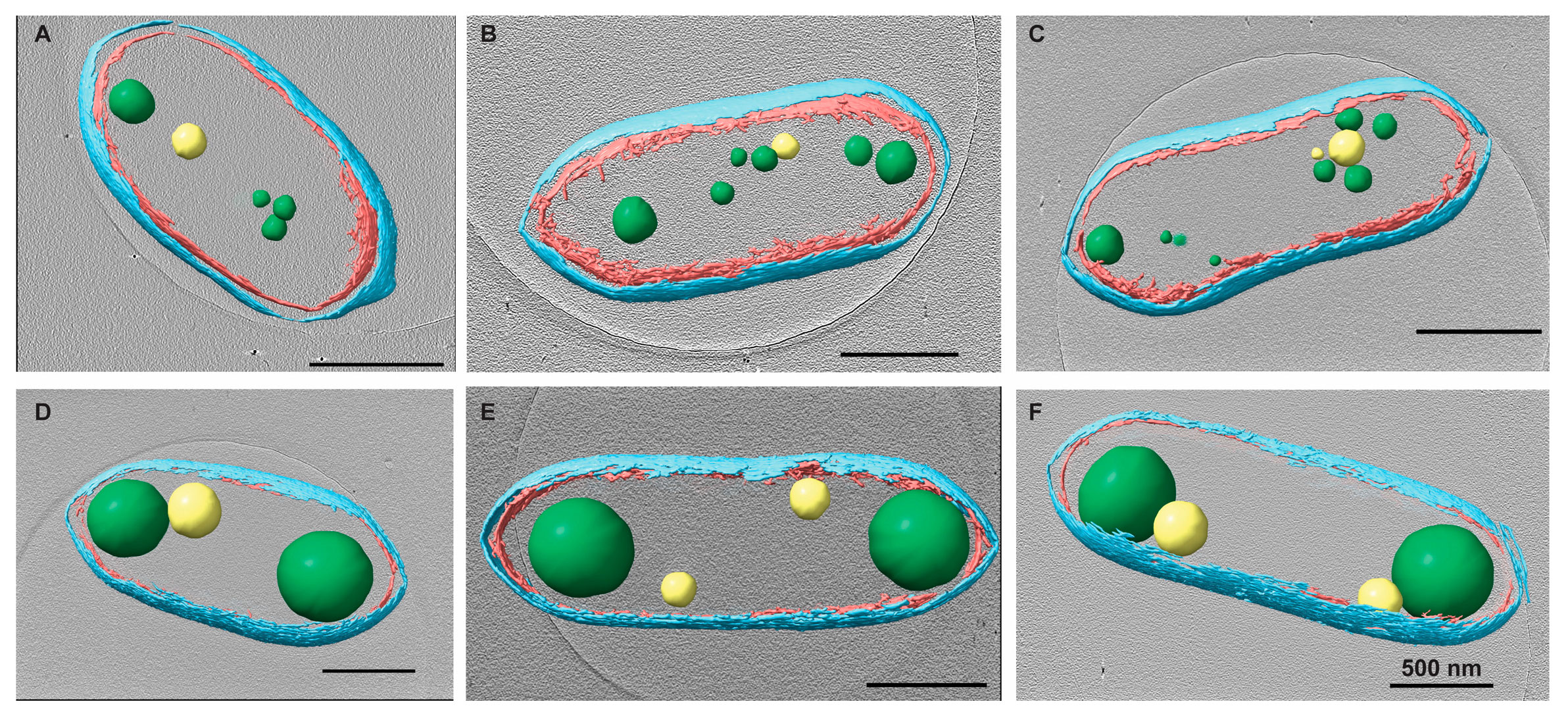
Researchers used advanced microscopy to study the structure and function of granules bacteria use to store nutrients.
Scientists with the Great Lakes Bioenergy Research Center published 94 peer-reviewed journal articles in the past year. These are some of the most notable discoveries and innovations providing foundational knowledge to enable economically and environmentally sustainable production of biofuels from non-food crops.
Machine learning; directed evolution; advanced microscopy; and long-term crop experiments are just some of the techniques GLBRC scientists used to advance our understanding of plants and microbes in the quest to advance bioenergy.

- Gene identification: Separate teams of researchers developed new tools to help identify priority targets for genetic engineering. Scientists at Michigan State University developed a pipeline for identifying gene regulators in plants, while a team at UW–Madison combined two techniques to speed discovery of genes that help microbes tolerate toxic chemicals encountered in biofuel production.
- Machine learning solves complex problems: UW–Madison scientists applied machine learning to two diverse questions. One team used it to reveal the genes that help yeasts resist oxidative stress, which could improve biomanufacturing. Another used it to pick the best solvents for accessing valuable chemicals in plant fibers.
- Bioenergy crops improve soil health: MSU researchers demonstrated how growing bioenergy crops can help farmers rebuild soil organic carbon.
- A study showed that lowering acidity improves biofuel yields from crops grown during a drought, which typically resist fermentation.
- A collaboration between scientists at MSU and UW–Madison showed that a defense mechanism that helps switchgrass fight of fungal pests in the field also inhibits biofuel production; but the study also identified fixes.

- UW–Madison researchers showed that using oxygen with a catalyst can break apart lignin fragments formed during biomass deconstruction, turning what was a waste product into aromatic molecules that microbes can funnel into useful chemicals.
- UW–Madison scientists used a systems-level analysis to understand how biomass deconstruction processes affect the microbes tasked with converting plant sugars into fuels.
- GLBRC researchers showed that microbes can convert chemicals in biomass pretreatment liquors — often treated as a waste product — into high-value chemicals.
- Using a process known as adaptive laboratory evolution, scientists discovered a new protein that enables microbes to digest a wider array of aromatic chemicals with just a single genetic modification.
- UW–Madison researchers used advanced microscopic imaging to reveal the inner workings of bacterial cells and improve understanding of mechanisms cells use to store carbon and respond to stress.
Sustainable Bioenergy Cropping Systems
Sustainable Biomass Conversion
Sustainable Field-to-Product Optimization