
News
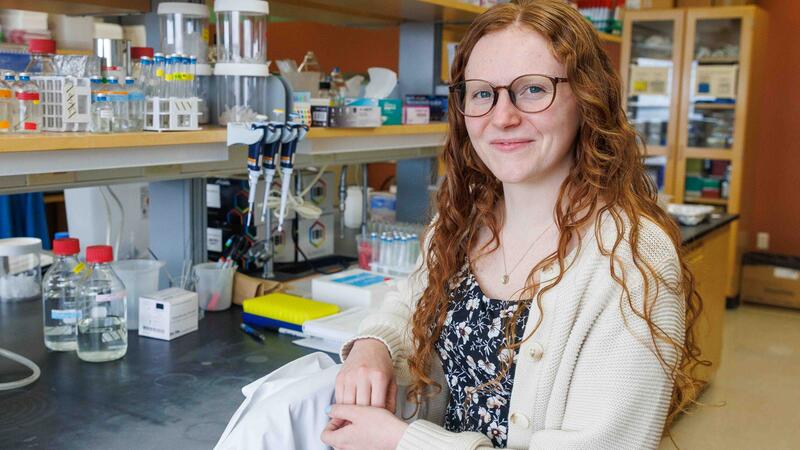
Sparking Curiosity: Sydney Bradley uses art to make science more accessible
As a graduate researcher at the University of Wisconsin–Madison, Sydney Bradley studies microbiology in pursuit of better biofuels. But she’s not just interested in publishing her findings in scientific journals.
The U.S. Department of Energy (DOE) has announced $178 million for bioenergy research to advance sustainable technology breakthroughs that can improve public health, help address climate change, improve food and agricultural production, and create more resilient supply chains.
This week, Natalia De Leon, professor of Agronomy at the University of Wisconsin–Madison in the College of Agricultural & Life Sciences and Great Lakes Bioenergy Research Center researcher, talks about her decision-making process to find balance everyday as a scienti
A new process developed by scientists at the Great Lakes Bioenergy Research Center enables greater production of squalene, a terpene with an array of uses in the biotechnology industry and as an energy-dense biofuel. Researchers increased plant production of the chemical by redirecting production to lipid droplets scaffolded to plastids in the cell.
The Great Lakes Bioenergy Research Center's outreach team joined groups from across UW–Madison for a Saturday of science exploration at the Kujichagulia Center for Self-Determination's Juneteenth celebration on June 18 at Penn Park in Madison. Attendees were invited to explore science at nearly a dozen UW Science Alliance hands-on educational stations, chat with scientists, and more.
What does it mean to foster an environment that truly feels welcoming? For Yiying Xiong, associate director of the Great Lakes Bioenergy Research Center, it all comes down to treating a team of coworkers like they are part of a family. Xiong spoke with us about her experiences nurturing these families in the hydropower industry and now academic research.
An integrated approach to land management practices in the U.S. can reduce carbon dioxide in the atmosphere far more than earlier estimates based on separate approaches, Great Lakes Bioenergy Research Center (GLBRC) researchers say. Their research was published May 31 in the journal Global Change Biology.


