
When expulsion is futile, try dilution
The Science
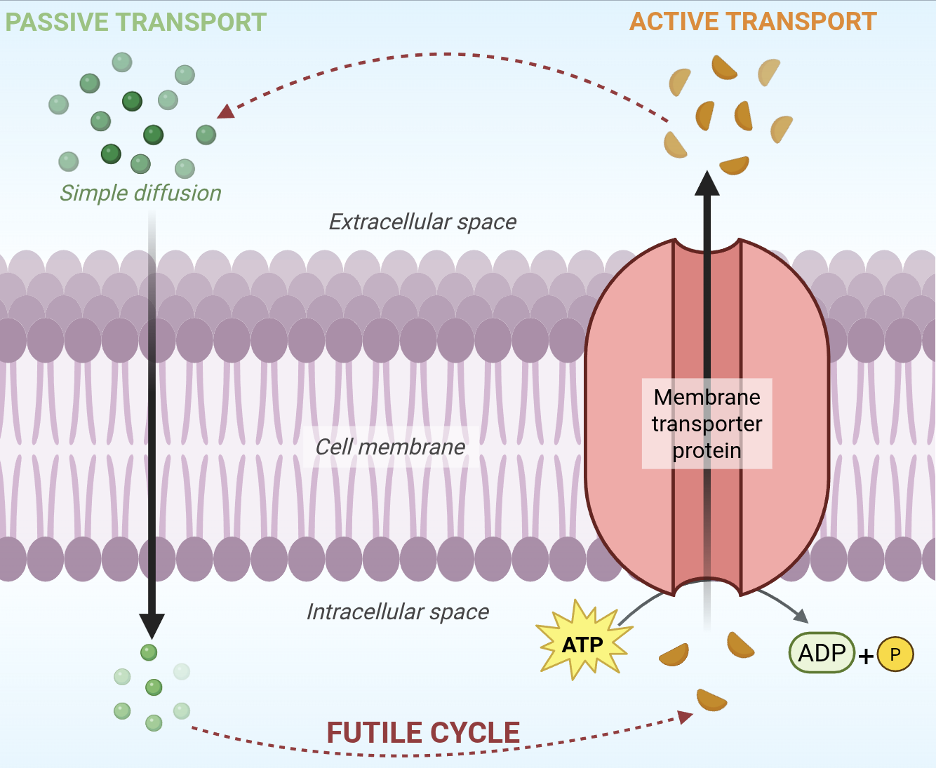
Non-food plants, including trees, grasses, and crop waste, could be a renewable source of fuels and chemicals usually made from petroleum. Some microbes can convert chemicals found in plants into valuable products. But treatments needed to break apart the plants also produce toxic chemicals that disrupt the microbes' protective cell membranes, slowing down the process. One way to overcome this problem is to use proteins that pump toxins out of the membrane. If those toxins freely pass through the membrane, this would create a “futile cycle” where the microbe wastes energy expelling toxins that seep back in.
To investigate, Michigan State University scientists with the Great Lakes Bioenergy Research Center used computer simulations to model how 33 known inhibitors found in broken down plant material (hydrolysate) interact with the membrane of a promising bioenergy microbe called Zymomonas mobilis. These simulations revealed that most inhibitors easily passed through the membrane and were highly toxic to the cells; only a few sugars were slow to penetrate. Concluding that most inhibitory molecules would likely overwhelm efforts to remove them, researchers suggest that it would be more effective to dilute the hydrolysate before feeding it to microbes.
The Impact
Energy crops grown on land unsuitable for food production could provide a renewable source of low-carbon fuels and chemicals and support rural economies. But toxins released during biomass pre-treatment are a challenge for biorefineries. Research has focused on engineering more robust microbes and characterizing how microbes respond to the toxins, yet scientists lack a complete molecular-level understanding of how these molecules interact with the membrane. These findings provide a framework to guide development of new strains and other strategies for improving biorefinery efficiency.
Summary
Lignocellulosic hydrolysates contain diverse compounds, including aldehydes, carboxylic acids, phenolics, and alcohols, that inhibit microbial growth by disrupting cell membranes. Although Z. mobilis combines high ethanol productivity with hopanoid-rich membranes that confer solvent tolerance, hydrolysate compounds still inhibit microbial growth. One proposed mitigation strategy is to pump these molecules out through active transport processes; however, if passive permeation rates are high, active transport would create a futile cycle where exported molecules diffuse back in, creating a net drag on fitness.
Here scientists used atomistic molecular dynamic simulations to measure the passive permeation of Z. mobilis membranes for 33 lignocellulose-derived compounds. Permeability coefficients spanned more than eight orders of magnitude driven largely by the balance between hydrophobicity and polarity. Hydrophobic inhibitors such as aromatic acids, aldehydes, and short chain alcohols readily partitioned into the membrane and showed high permeability consistent with rapid passive influx and strong toxicity. Most polar molecules have lower but still appreciable permeation rates; only the most polar sugars have low permeabilities. These findings, coupled with hydrolysate composition data, indicate most of these molecules are so permeable that passive permeation is likely to overwhelm efflux and suggest that lowering hydrolysate concentrations may be the most effective strategy.