
GLBRC alumni profile: Ilya Gelfand
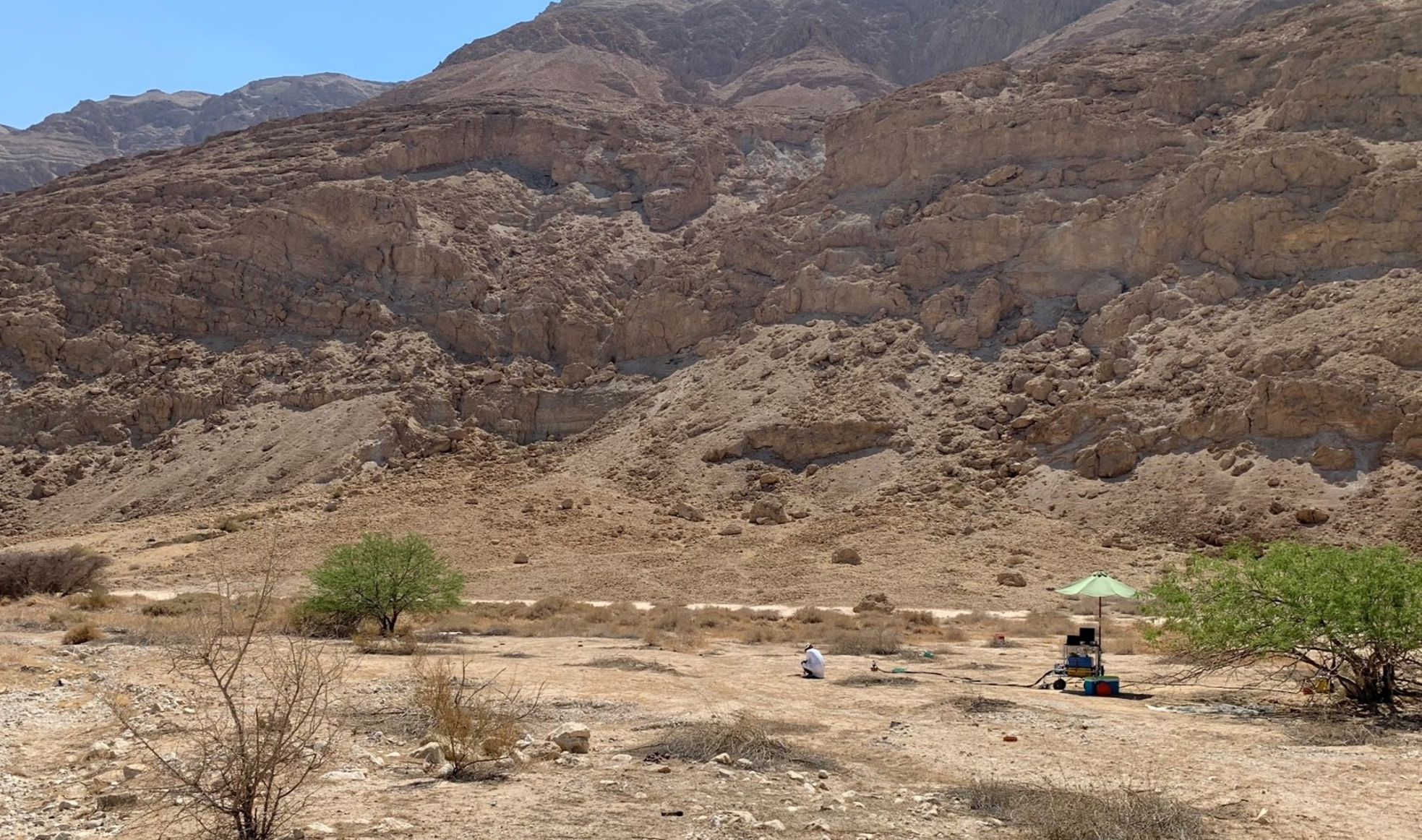
Ilya Gelfand joined GLBRC in 2008 after earning a PhD from the Weizmann Institute of Science in Israel. As a postdoctoral researcher in Phil Robertson’s lab at Michigan State University, his research on carbon balance led to a 2013 Nature paper highlighting the potential for growing cellulosic bioenergy crops on marginal farmland. Gelfand is now an associate professor at Ben-Gurion University of the Negev in Israel, where he studies biogeochemistry and ecosystem ecology.
When were you with GLBRC?
I started in 2008 and finished in 2017 — almost 10 years. I was a postdoc, then a research associate, then a research professor, and finally a research associate again.
Did you have a specific research question you were working on during that time?
I was with Phil Robertson, working on sustainability. From the beginning, the idea was to write a paper about the carbon balance of biofuels. We began gathering data early on, but faced a lot of challenges, and the paper wasn’t published until 2013.

When I joined, GLBRC had just started, so there were no data yet. I relied on LTER (Long-Term Ecological Research) data until enough GLBRC data became available. By the time I left, we had enough for another carbon balance paper, which was published in 2020.
Before coming to the U.S., I had never worked in agriculture — my background was in nitrogen cycling of forest ecosystems. But my funding was for biofuel carbon balance, so that became my focus. The Nature paper took a long time because it involved complex modeling, data integration, and collaboration across many groups. Along the way, we also published another important study on how converting grassland to biofuel production affects carbon balance — one of the most difficult and rewarding papers I’ve worked on.
At GLBRC I had a pretty free hand, within the boundaries of funding. No one told me exactly what to do — I worked on what I thought was helpful, important, and fun.
What is your current role?
I’m now an associate professor at Ben-Gurion University of the Negev. My primary research is on trace gas emissions from soil — nitrogen oxides, methane, and CO₂ — which I first learned from Phil. Before coming to GLBRC, I had never done field measurements of trace gas emissions, though I knew I wanted to, since no one in Israel was doing this work at the time.
And how did your experience with GLBRC influence your career?
It was a mixture of influences, including LTER. Both projects share a long-term, collaborative approach to big questions. I learned how to collaborate and did a lot of collaborations at GLBRC, and I hope I’m still an easy person to collaborate with today.
Phil Robertson, especially, showed me how to think about science and how to do science. GLBRC is a very good example of this: you cannot do good science alone.

What’s one thing you learned during your postdoc that has stayed with you?
If you can help, help immediately. When somebody asks, “Can you help me?” say yes. That’s the most important lesson I learned at GLBRC. And if you have funding, share it. Don’t hold it to yourself. That culture of sharing resources — not only equipment, but also ideas and expertise — is something I carried with me.
What advice would you give to a recent graduate looking for a postdoc?
GLBRC is a great place for a postdoc, but you need to think carefully about who you want to work with. GLBRC has many different PIs, and if you have a good relationship with your advisor, it’s a wonderful environment. There are tremendous resources that make it possible to do excellent science. And the collaborations I started at GLBRC are still active today.