
Biorefinery side hustles make fuels more competitive
The Science
Lignocellulosic biorefineries make liquid fuels out of non-food plant material, such as crop waste or trees and grasses grown just for energy. In addition to biofuel, these refineries generate energy-rich byproducts that can be a source of additional income. These side hustles not only pad the bottom line, they make biofuels more competitive by allowing refiners to sell the fuel for less money.
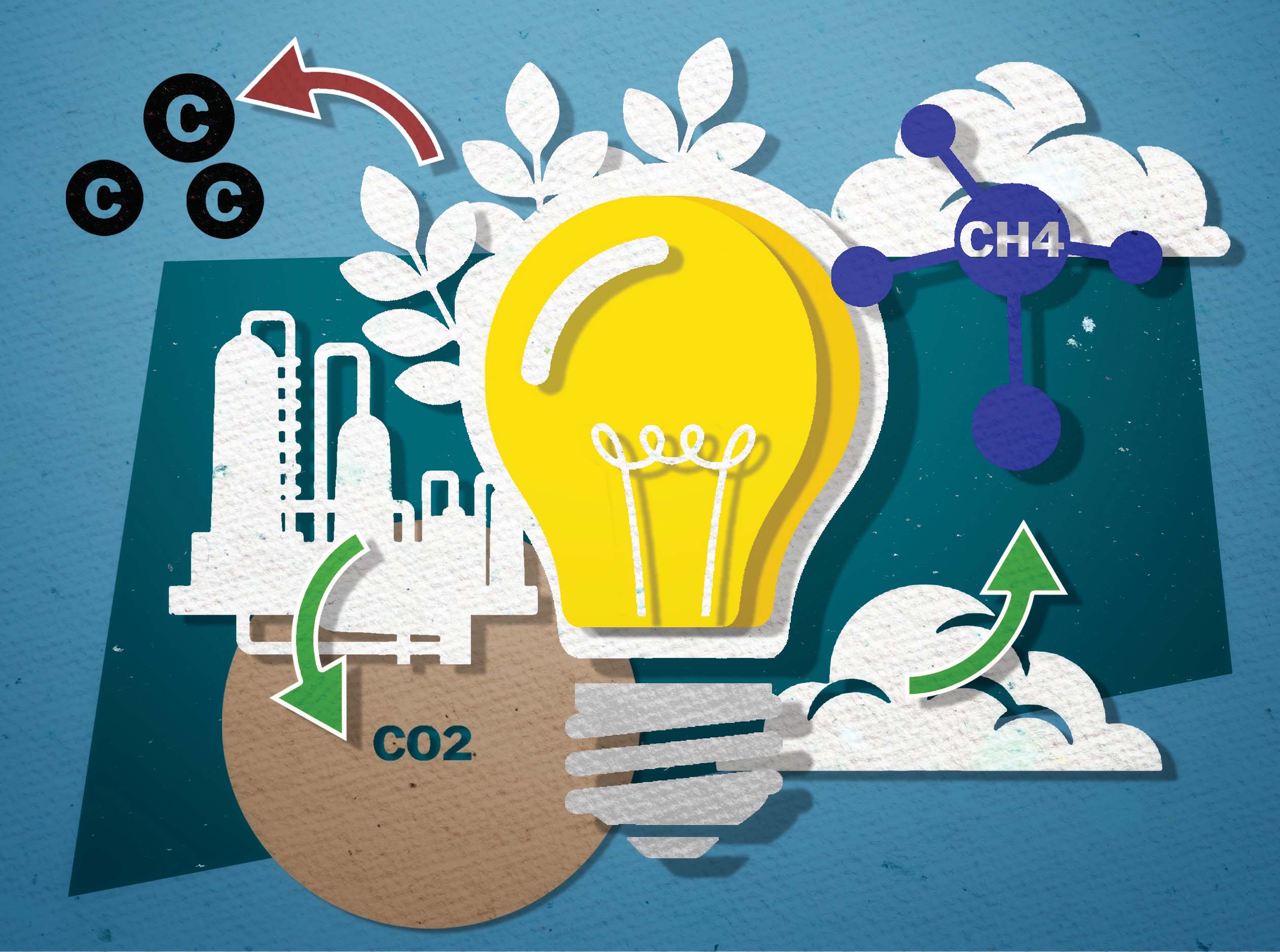
There are several ways to use these side streams. For example, anaerobic digestion of the leftover liquids produces methane, which can be upgraded to biomethane (also called renewable natural gas). Burning conversion residues can generate electricity. Lignin can be broken down and converted into valuable chemicals. And carbon dioxide given off by the processes can be captured and permanently stored to keep it out of the atmosphere.
In this study, researchers used modeling to evaluate the economic and environmental benefits of four strategies: burning the side streams to generate electricity; producing biogas and upgrading it to biomethane; lignin valorization; and carbon capture and storage. Results showed that biomethane production is the most energy efficient process and leads to the lowest price at which a biorefinery can sell ethanol and turn a profit. However, the advantage shrinks without incentives such as low carbon fuel credits. Lignin valorization has the highest carbon footprint and results in the highest break-even selling price for ethanol because of the additional chemicals needed to break down the lignin. Generating electricity has the lowest carbon footprint of the co-production strategies and results in the second-highest break-even fuel price. Carbon capture and storage has the lowest net carbon footprint overall and results in a minimum selling price on par with electricity generation.
Together, the results highlight economic and environmental trade-offs as well as the impacts of financial incentives, regional variations in electricity prices and carbon footprint.
The Impact
This study provides the first insights into the most favorable uses of biorefinery side streams across various conditions and locations. This can inform investment, siting, and policy decisions around the construction of second-generation lignocellulosic biorefineries. The findings also highlight the importance of aligning financial incentives, emission reduction targets, and regional resources to speed up commercial deployment and scale up domestic biofuel production.
Summary
In addition to liquid fuels, second-generation lignocellulosic biorefineries generate energy-rich side streams, including lignin, biogas, and conversion residues, raising questions about how these streams should be used to balance economic and environmental performance. Strategies include: upgrading biogas to biomethane, a renewable fuel that can be injected into natural gas pipelines; conversion of lignin to valuable platform chemicals; and using side streams to generate heat and electricity can enable integration of carbon capture and storage (CCS) to increase sustainability. Researchers with the Great Lakes Bioenergy Research Center used modeling and optimization to evaluate energy and carbon efficiencies, cost, and carbon footprint of electricity generation, biogas upgrade to biomethane, lignin valorization, and CCS. They further investigated the impacts of key parameters on system economics and carbon footprint (CF) as well as implications of geographic variability in co-product selling price of biomethane and electricity.
Results showed coproduction of biomethane leads to the highest energy efficiency (58%) and the lowest minimum fuel selling price (MFSP) for ethanol, 15% to 55% lower than electricity generation with current financial incentives for renewable fuel production. Without incentives, the MFSP reduction is ~3.5% relative to electricity. Among the co-production systems, electricity sold to the grid is the most sustainable option with net CF of 16.5 g CO2e per MJ. Even with an 80% future decline in grid carbon intensity, electricity co-production results in ~5% net CF relative to biomethane. CCS achieves the lowest net carbon footprint overall. Modeling showed that burning natural gas for CCS increases net CO2 capture, but results in release of fossil-based emissions. Biomethane co-production is economically preferred in more than 45 U.S. states under current market conditions. However, electricity co-production is preferred in states with high electricity prices such as Massachusetts, New York, and California. Lignin valorization results in the highest CF and MFSP because of additional materials required for lignin depolymerization.