

This image of a bacterial cell shows lipid droplets on the exterior of the cell wall. The lipids have escaped through a cell envelope that has been modified by UW–Madison and GLBRC researchers to increase lipid production. Photo courtesy of the Donohue Lab
Who We Are
The Great Lakes Bioenergy Research Center (GLBRC) is a U.S. Department of Energy-funded Bioenergy Research Center led by the University of Wisconsin–Madison. With Michigan State University and other partners, we are developing sustainable biofuels and bioproducts made from dedicated energy crops grown on marginal lands. Our mission is simple: creating biofuels and bioproducts that are economically viable and environmentally sustainable.
Research Themes
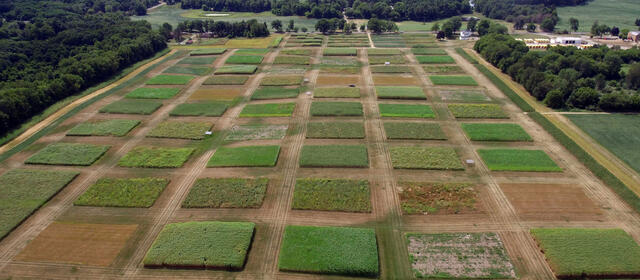
Sustainable cropping systems
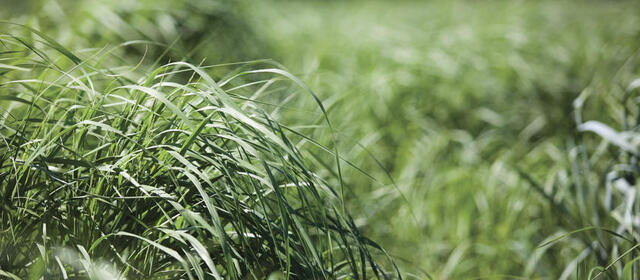
Engineering bioenergy crops to enhance their environmental and economic value
GLBRC News
Studies provide clues to how bacteria shed fat
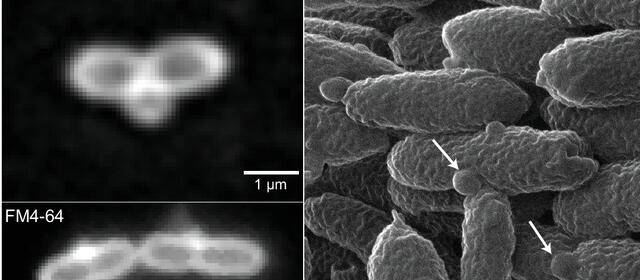
In 2017, GLBRC scientists found two strains of bacteria that produced high levels of lipids by squeezing them out of their cell envelope, making the oil easier to harvest. Two new studies help explain the mechanisms these mutant bacteria use to shed their fat and reveal new ways to increase lipid secretion.